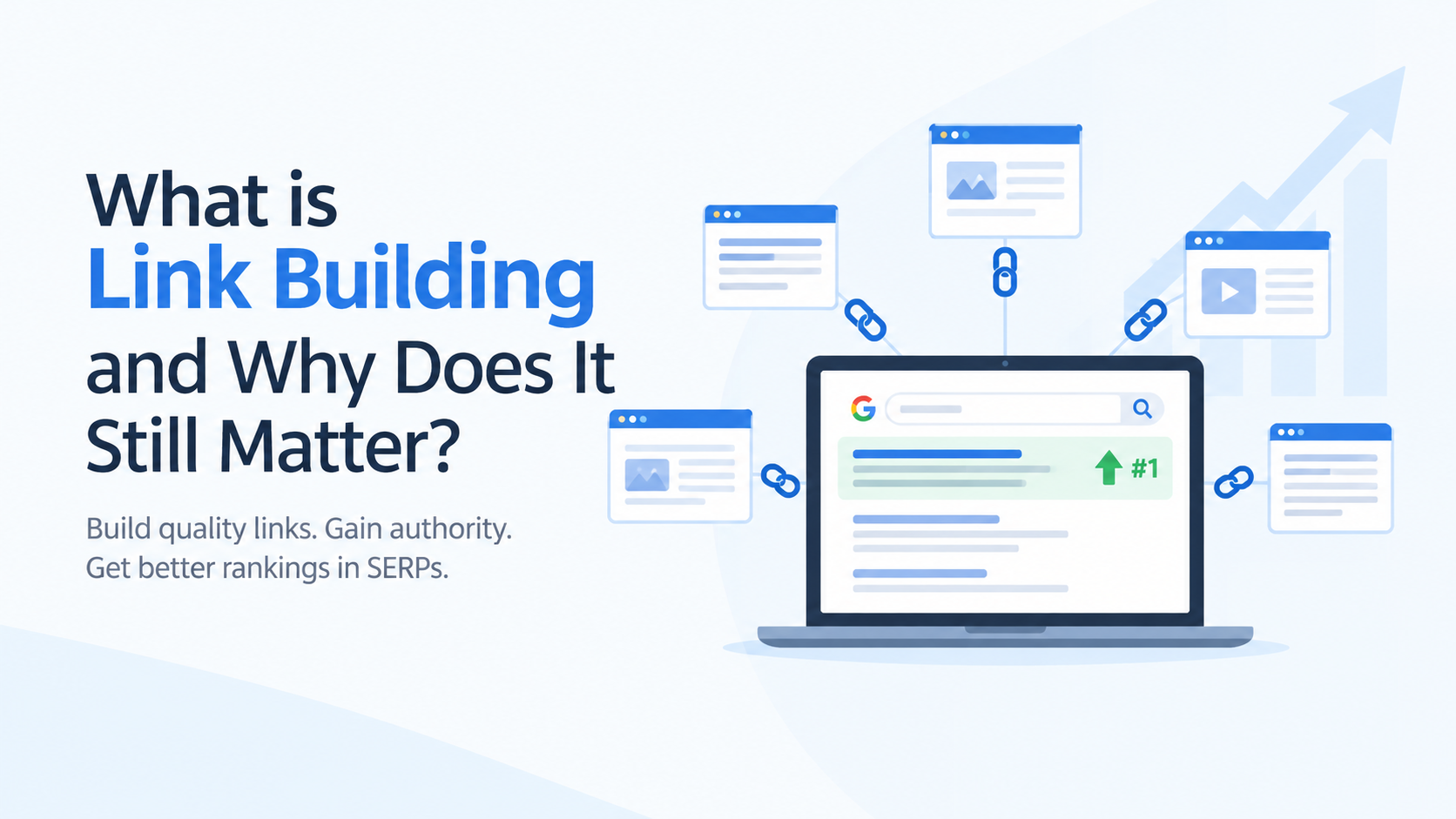
Link building remains an important part of search engine optimization (SEO), even as search engines become better at understanding content. A website may publish useful articles and target the right keywords, but it can still struggle to compete in search results without strong signals of credibility and authority. This is where link building comes in.
What Is Link Building in SEO?
Link building is the process of earning links from other websites that point to your website. These are called backlinks or inbound links.
For example, if a marketing blog mentions your SEO agency in an article and links to your website, that link is a backlink.
Search engines use links to discover web pages and understand relationships between content. Links can also help search engines assess a page's relevance and prominence.
However, not all backlinks offer the same value. A relevant link from a trusted website can be more useful than dozens of links from unrelated or low-quality sites.
Why Does Link Building Still Matter?
1. It Can Support Search Rankings
Backlinks remain one of the signals search engines can use to evaluate pages. When reputable websites reference your content naturally, those links may help strengthen its position in search results.
However, backlinks alone cannot guarantee higher rankings. Content quality, search intent, technical SEO and competition also matter.
2. It Helps Search Engines Discover Content
Links help search engine crawlers find pages and understand how they connect. Links from other websites can help search engines discover new content, although they do not guarantee that a page will be indexed.
3. It Builds Credibility and Brand Awareness
Being mentioned by respected websites can introduce your business to a relevant audience. Even when a link does not directly improve rankings, the mention may bring referral traffic and help people become familiar with your brand.
4. It Can Support Long-Term SEO Growth
Earning relevant links to useful content can strengthen your website's overall visibility over time. The key is to focus on genuine editorial value rather than chasing backlink numbers.
What Are the Best Ways to Build Quality Backlinks?
Some practical link-building methods include:
-
Guest posting: Contribute useful articles to relevant publications.
-
Link insertions: Earn a relevant mention within an existing article when it genuinely improves the content.
-
Digital PR: Share original research, expert insights or newsworthy stories that publishers may reference.
-
Resource link building: Create helpful guides, tools or research that other websites may want to cite.
-
Unlinked brand mentions: Find websites mentioning your brand without a link and ask whether adding one would help readers.
Focus on relevance, editorial standards, real audience value and the credibility of the linking website. Avoid automated link schemes and paid links intended to manipulate rankings.
Frequently Asked Questions
Is link building still relevant for SEO?
Yes. Links remain useful for discovering content and assessing relevance and prominence. Their value depends on context, quality and how naturally they fit into the web.
How many backlinks does a website need?
There is no fixed number. The right approach depends on your industry, competitors, target pages and existing backlink profile. Focus on earning useful links rather than meeting an arbitrary target.
Are all backlinks good for SEO?
No. Spammy, manipulative or irrelevant links may provide little value and can create risks if they violate search engine guidelines. Quality and context matter more than quantity.
How long does link building take to show results?
There is no guaranteed timeline. Results depend on factors such as crawling, indexing, competition, content quality and the links earned.
Final Thoughts
Link building still matters because links help connect websites, support content discovery and can contribute to search visibility. The most sustainable approach is to earn relevant mentions from credible websites while publishing content worth referencing.
Rather than focusing only on backlink counts, build relationships with publishers and prioritise links that make sense for both search engines and real readers.